

Blog
Sublimated vs Stitched Jerseys: Which One Lasts?

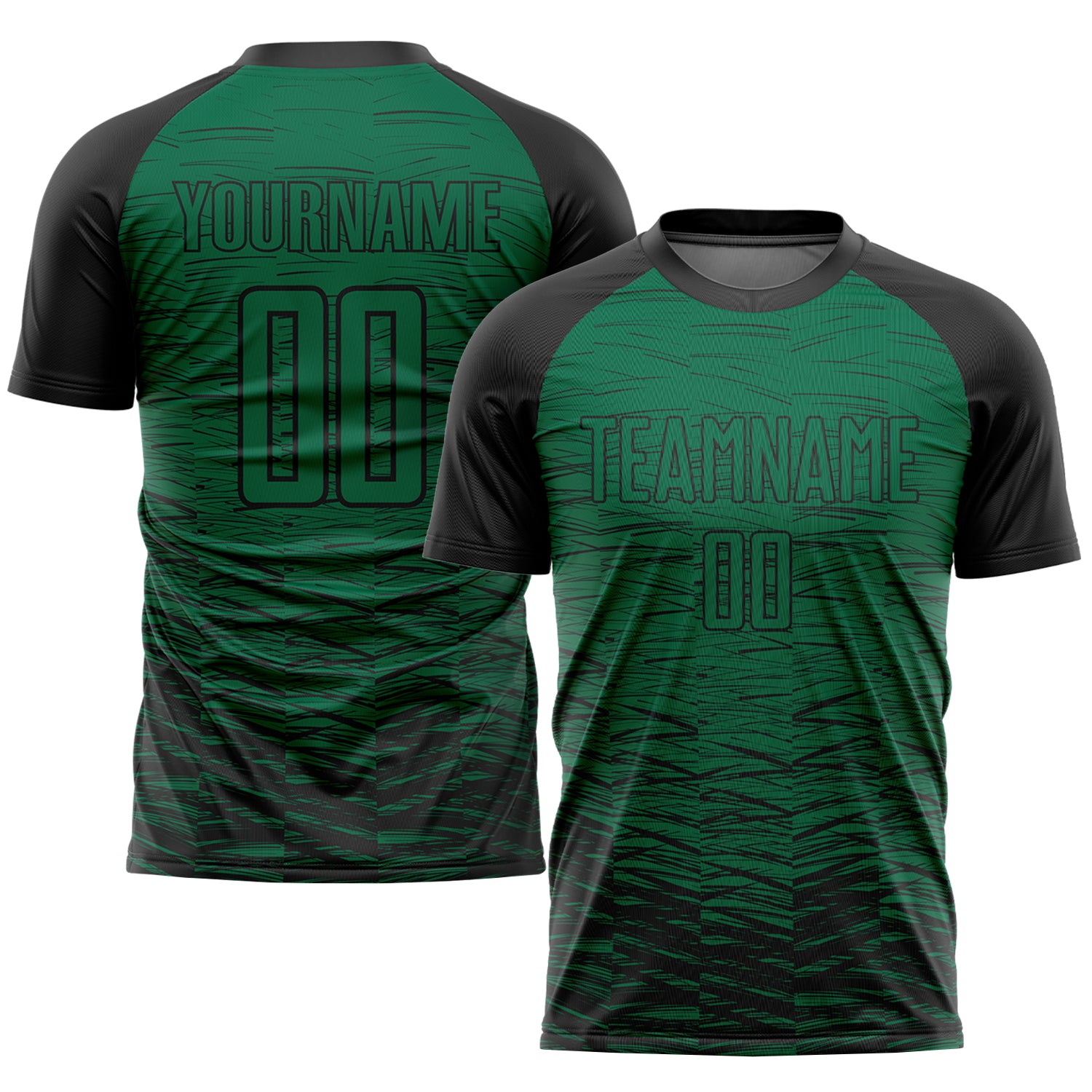
There are three ways to get a name, a number and a design onto a jersey, and they age completely differently. If you are ordering for a team that will play and wash the kit thirty times this season, the difference matters more than the price does.
The three methods, briefly
Heat transfer (vinyl)
A shape is cut from colored vinyl and pressed onto the garment with heat. It is the cheapest and fastest method, and it is what most low-cost custom shops use for numbers.
It sits on top of the fabric as a separate layer. You can feel it with a fingertip. That layer does not breathe, and because it expands and contracts at a different rate than the fabric underneath, it eventually cracks across the middle and lifts at the corners. Hot dryers accelerate this considerably.
Stitched (twill)
Letters and numbers are cut from twill fabric and sewn onto the jersey, usually with a satin stitch around the edge. This is the traditional method and it looks and feels substantial.
It is durable, and it is also heavy, warmer to wear, and expensive because it is labor-intensive. The failure mode is threads catching and the edge of a letter lifting, which is repairable but annoying. It is also the least flexible option for full-body designs, because you cannot stitch a gradient or an all-over pattern.
Sublimation
The design is printed with dye that turns into a gas under heat and pressure, and bonds with the polyester fibers themselves. The dye becomes part of the fiber rather than a layer on top of it.
Run your hand over a sublimated jersey and you cannot feel where the design is. There is no edge, because there is no separate layer. That is the whole point.
What that means after a season
A vinyl number fails by cracking. A stitched letter fails by lifting at a corner. A sublimated design does not have a failure mode of that kind, because there is nothing bonded to the surface that can separate from it. What it does instead is fade, slowly and evenly, over a long time and mostly from UV exposure rather than washing.
Practically:
- Peeling: possible with vinyl, unlikely with stitched, not possible with sublimation.
- Cracking: common with vinyl after repeated hot drying. Does not apply to the other two.
- Weight and breathability: sublimation adds nothing. Vinyl adds a non-breathable patch. Stitching adds real weight.
- Design freedom: sublimation can do gradients, all-over patterns and photographic detail. The other two cannot.
- Cost at volume: sublimation and vinyl are comparable. Stitching costs significantly more.
Where sublimation has real limits
This is not a case where one method wins on every axis, and it is worth being straight about the trade-offs.
It only works on polyester. The dye bonds with synthetic fibers. On a cotton garment it will not hold, which is why sublimated cotton tees are not a thing. If you specifically want a heavyweight cotton jersey, sublimation is not the process.
It cannot print white. The dye is translucent and there is no white ink. Anything white in a sublimated design is the base fabric showing through, which means the garment starts white and color is added around it. On a dark jersey, a white number is achieved by printing the dark color around it rather than printing the white.
It has no texture. If you want the raised, physical feel of twill letters on a letterman jacket or a traditional hockey crest, sublimation cannot give you that. It is a flat process by design.
Which to pick
For a team that plays a full season in the kit, sublimation is usually the right answer: nothing to peel, nothing to crack, no added weight, and every player can have a different number at no extra cost because there is no per-letter labor.
Choose stitched when the texture is the point. A varsity letterman jacket with chenille letters is a stitched garment by definition, and it would lose its character sublimated.
Choose vinyl when you need six shirts by Friday and they will be worn twice. It is a fine method for short-life garments and a poor one for a season.
How to tell what you already own
Turn the jersey inside out and look at the back of the number. If you can see the number shape from the inside as color in the fabric, it is sublimated. If the inside is blank and you can feel a distinct patch from the front, it is vinyl. If you can see stitching around the outline, it is twill.
Frequently asked questions
What is a sublimated jersey? One where the design is dyed into the polyester fibers under heat and pressure, rather than printed or sewn onto the surface. There is no separate layer, so the design cannot peel, crack or lift.
Do sublimated jerseys fade? Slowly, and mostly from sunlight rather than washing. Cold water, no bleach and staying out of prolonged direct sun will keep the color strong for years. There is more detail in the guide on how to wash a jersey.
Is sublimation cheaper than stitching? Yes, usually by a wide margin, because stitched lettering is labor per letter while sublimation is one print regardless of how complex the design is. That is also why a full-color all-over design costs no more than a plain one.
Can you sublimate a cotton shirt? No. The dye bonds with polyester. On cotton it will wash out. Performance garments are polyester, which is why sublimation and athletic wear go together.
Will every jersey in a team order match? Yes. Because the design is printed from the same file each time rather than assembled by hand, color consistency across a roster is far better than with cut-and-press methods.
See it on a real garment
Everything NationFans prints is sublimated for the reasons above, in sizes XS to 7XL with no minimum order. Browse custom soccer jerseys, basketball jerseys, softball jerseys, or the custom jerseys hub. For the stitched option, see custom letterman jackets.