

Blog
Custom Throwback Jerseys: How to Get the Retro Look Right

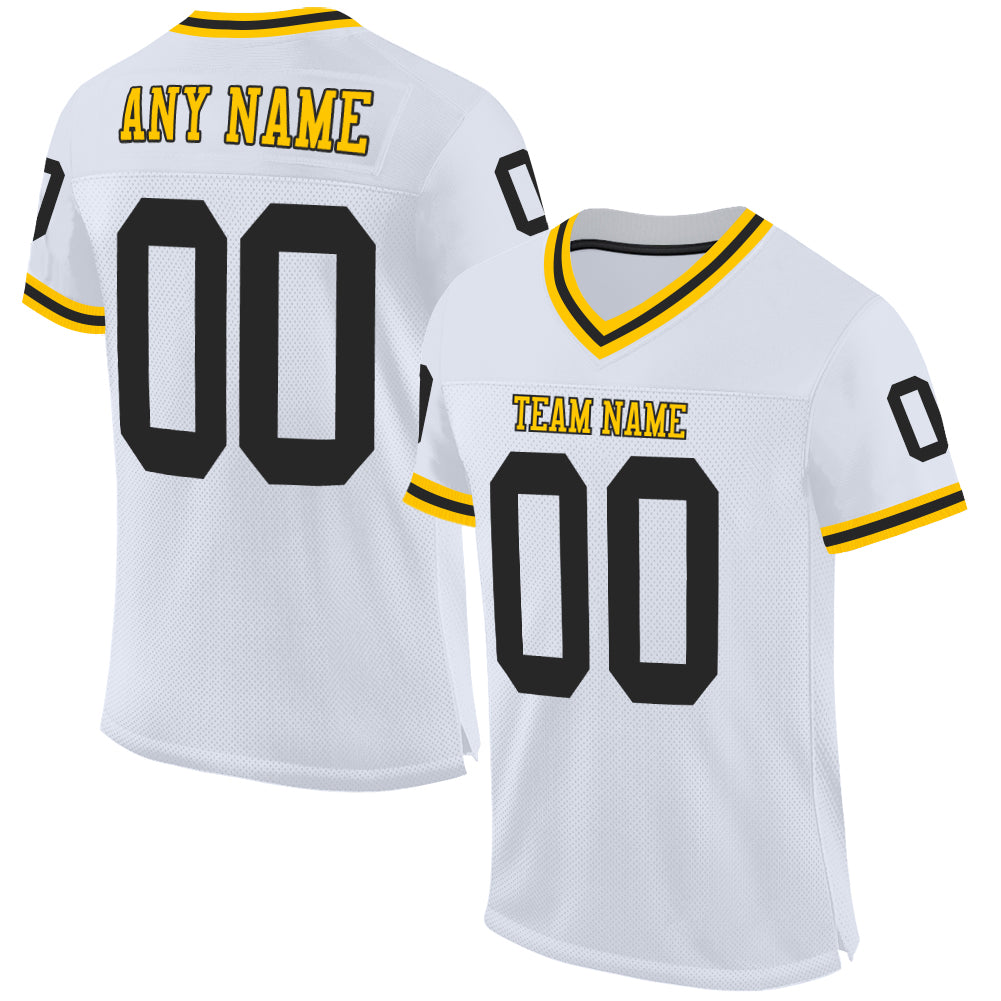
A throwback jersey either reads as retro immediately or it reads as a modern jersey in old colors. The difference is rarely the color palette. It is the cut, the lettering and the way the color is divided up, and once you know what to look for it is easy to get right.
This is a guide to designing a custom throwback that actually looks the part, and to doing it without stepping on a licensed team design.
Retro is a silhouette before it is a color
The fastest way to date a jersey is its shape. Older jerseys were cut fuller through the body and the sleeve, with a shorter overall length and a wider armhole. Modern athletic cuts are tapered, longer in the body and closer through the shoulder.
If you take a modern slim cut and put 1970s colors on it, it looks like a modern jersey. Start from the roomier cut and you are already most of the way there before you have chosen a single color.
For basketball this is most obvious in the shorts, which is a whole topic of its own. For football and hockey it shows up in the sleeve and the shoulder yoke.
Color blocking: fewer colors, harder edges
Modern jerseys tend to use gradients, fades and small accent details. Retro jerseys used flat blocks of color with hard boundaries, usually two or three colors total, and they put those boundaries in specific places:
- A contrast yoke across the shoulders and upper chest
- Full-width sleeve stripes, often two or three parallel bands
- A contrasting collar and cuff rib
- A single bold side panel rather than a shaped insert
Keep the palette tight. Two strong colors plus white or cream will look more period-correct than four colors will, because four-color jerseys are a modern manufacturing luxury.
Lettering does most of the work
Nothing signals an era faster than the numbers. Modern jersey numerals are usually tall, narrow and thin-stroked. Retro numerals are wider, heavier, and often carry a double outline in a contrasting color.
Two details worth copying:
- Block over script for numbers. Heavy block numerals with a contrasting outline read as older, and they are also easier to see from the stands.
- Arched team names. A name arched across the chest rather than sitting flat is a strong period cue, especially in baseball and basketball.
If you want to go deeper on the numerals themselves, the jersey number fonts guide covers which styles stay legible at distance and which ones fall apart.
Cream is the shortcut nobody uses
Swapping bright white for cream or off-white is the single cheapest way to make a design read as older. Modern optical white is a fairly recent look. Older uniforms photographed warmer, partly because of the fabrics and partly because of the film.
Cream also sits better next to old gold, maroon, forest green and navy, which are the colors most people reach for on a throwback anyway.
The part people get wrong: licensing
This is worth being direct about. Real team jerseys, current or historic, are licensed. Team names, logos, wordmarks and specific uniform designs belong to those teams and leagues, and reproducing them is not something a custom shop can legally do for you.
What you can do is design something original in the same visual language. In practice that means:
- Use the era’s color combinations, but not a specific team’s exact palette-and-logo pairing
- Use period lettering styles, which are typefaces, not trademarks
- Use your own team name, your own city, your own club, or your own name and number
- Skip real team logos entirely, including “inspired by” versions
Every throwback in the NationFans catalog is an original design for exactly this reason. You are getting the look of the era with your own name on it, which is also more interesting than wearing someone else’s surname.
Where throwbacks actually get worn
The two biggest reasons people order them are theme nights and alumni games. A rec league that runs a retro night, an alumni weekend where the old squad wants matching kit, a company team that wants something with more personality than a plain performance tee.
The third reason is simply that they look good off the field. A roomier cut with heavy block lettering wears more like a piece of clothing than a modern athletic jersey does, which is why throwbacks show up at tailgates and watch parties more than current-cut jerseys do.
Designing yours: a working order
- Pick the era, not the team. 1970s, 1980s and 1990s each have a distinct look. Decide which one you are after.
- Choose two colors plus a neutral. Cream or white as the third.
- Place the blocking. Shoulder yoke, sleeve stripes, collar rib. Pick two of the three, not all three.
- Choose heavy block numerals with an outline.
- Arch the name across the chest if the sport suits it.
- Check it at distance. Look at the mockup from across the room. If the number is hard to read there, it will be worse from the stands.
Frequently asked questions
Can you make a replica of a specific team’s old jersey? No. Those designs, logos and wordmarks are licensed property. What we make is original throwback-styled kit in the colors and cuts of the era, carrying your own name and number.
Do throwback jerseys fit differently? Yes, generally roomier through the body and sleeve than a modern athletic cut, which is part of the look. If you are between sizes and want the period fit, size up. Check the Size Chart tab on the product page before ordering, because made-to-order items cannot be exchanged for a different size.
Is the lettering stitched or printed? The throwback jerseys in this collection are sublimated, meaning the design and numbering are dyed into the fabric rather than sewn on top. That keeps the jersey lighter and means nothing can peel or lift at the corners.
Can every player have a different number? Yes, and there is no per-name charge. A twelve-person order with twelve different names and numbers costs the same per jersey as a single one.
How long does a throwback order take? Production runs 5 to 9 business days, and US transit adds another 7 to 10 business days. For a themed game night, work backwards from the date and order with room to spare.
Start your design
Browse throwback jerseys, throwback basketball jerseys and retro basketball shorts, or start from the full custom jerseys hub. Sizes run XS to 7XL with no minimum order.